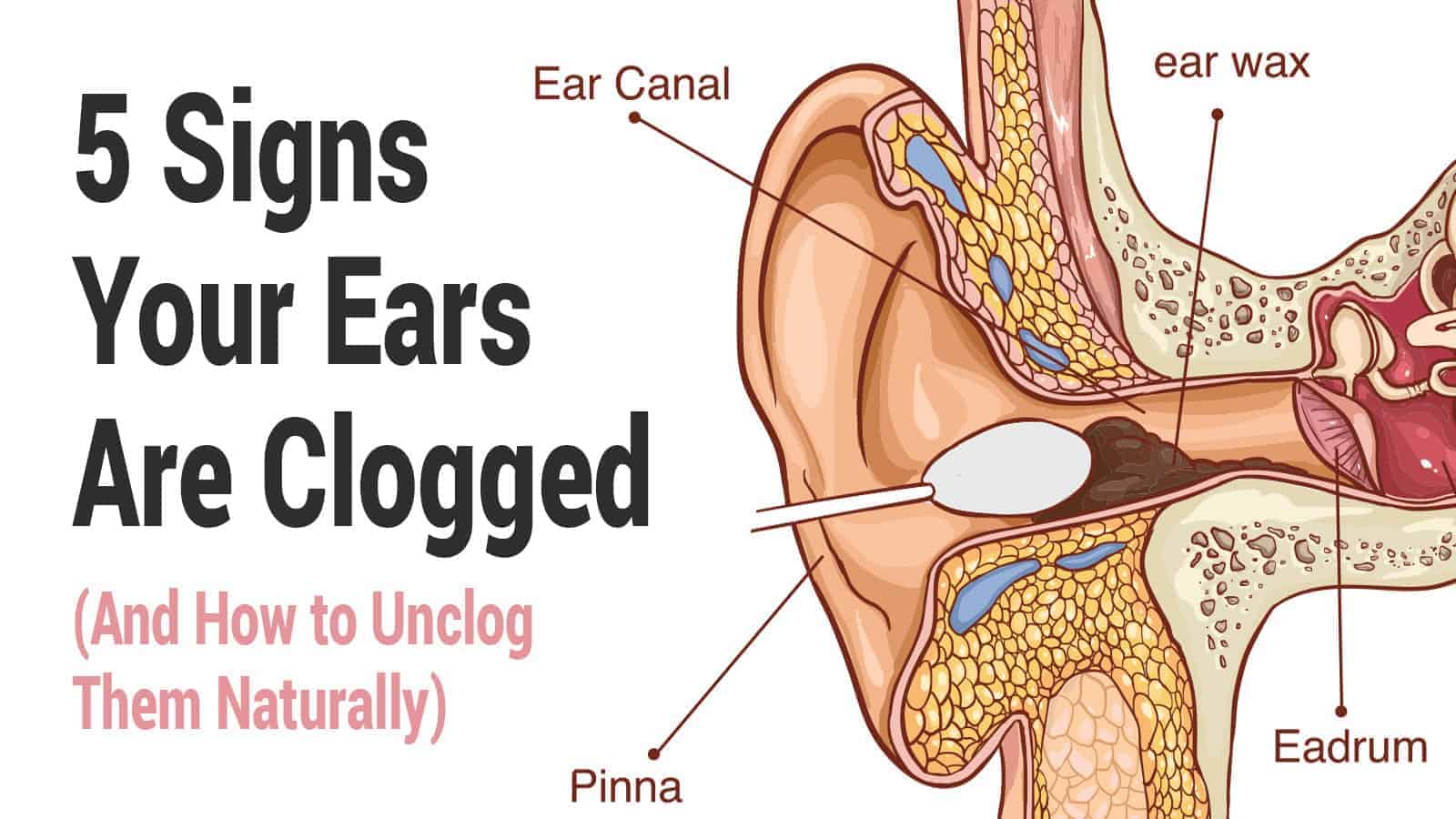


It can happen suddenly. You wake up and your hearing feels muffled. Your ear feels “full.” Maybe there’s pressure, popping, or even mild dizziness.
Clogged ears are incredibly common.
They can be caused by simple wax buildup, sinus congestion from a cold, allergies, trapped water after swimming, or changes in air pressure – like after flying.
Most of the time, ear clogging is temporary and harmless.
But sometimes, it can signal inflammation, infection, or a blockage in the Eustachian tube – the small passage that helps balance pressure between your ear and your nose.
The key is knowing the difference.
When you understand the signs of clogged ears, you can take the right steps to relieve discomfort naturally – and recognize when it’s time to see a doctor.
Let’s break down the most common symptoms and the safest ways to support your ears.

🧠 Why Do Ears Get Clogged in the First Place?
That uncomfortable “full” sensation doesn’t just happen randomly. Ear clogging almost always traces back to one of three core issues: pressure imbalance, fluid buildup, or excess earwax.
To understand why, it helps to know a little about how your ear works.
Your ear has three main parts:
- The outer ear (the visible part and ear canal)
- The middle ear (behind the eardrum)
- The inner ear (which controls hearing and balance)
Connecting your middle ear to the back of your nose is a small passageway called the Eustachian tube. Its job is simple but important – it equalizes pressure and allows fluid to drain properly.
When that tube becomes swollen or blocked, pressure builds. That’s when your ear feels clogged.
Here Are 5 Signs Your Ears Are Clogged
🤧 Sinus Pressure or Facial Pain
🔕 Muffled Hearing or Fullness
🌪️ Dizziness or Lightheadedness
🤒 Cold or Allergy Symptoms
🚨 Ringing, Discharge, or Severe Pain
📊 Clogged Ears vs. Ear Infection: How to Tell the Difference
Not all ear pressure is the same.
Sometimes it’s simple congestion or wax buildup. Other times, it may be an infection that needs medical treatment.
The symptoms can overlap, which is why many people aren’t sure what they’re experiencing.
Understanding the differences helps you choose the safest next step.
Here’s how clogged ears from pressure or wax compare to a true ear infection.
👶 Clogged Ears in Children – What Parents Should Know
Children experience clogged ears more often than adults, and for good reason.
Their Eustachian tubes are shorter, narrower, and more horizontal. That makes it easier for fluid, mucus, and bacteria to get trapped behind the eardrum.
Even a mild cold can quickly lead to ear pressure.
Unlike adults, young children may not say “my ears feel full.”
Instead, parents might notice:
- Tugging or pulling at the ear
- Increased fussiness
- Trouble sleeping
- Trouble hearing or responding
- Low-grade fever
In babies and toddlers, fluid buildup may develop silently after a cold.
If symptoms are mild and there’s no fever or severe pain, your pediatrician may recommend watchful waiting. Many mild fluid buildups resolve within a week or two.
However, seek medical care promptly if your child has:
- Fever over 101°F
- Severe crying or ear pain
- Drainage from the ear
- Balance difficulties
Children’s ears are delicate. Early treatment prevents complications and protects long-term hearing development.
🦠 Can Clogged Ears Turn Into Something Serious?
Most clogged ears are temporary.
But when pressure, fluid, or infection isn’t addressed, complications can develop — especially if symptoms worsen instead of improve.
Here’s what can happen in more serious cases:
🌟 Middle Ear Infection
🌿 Prolonged Hearing Changes
💫 Eardrum Damage (Rare)
🌈 Chronic Eustachian Tube Dysfunction
🌿 How to Unclog Your Ears Naturally (Safely)
Most clogged ears improve on their own within a few days.
The goal with natural support isn’t to force anything out – it’s to reduce inflammation, balance pressure, and gently soften wax so your ears can clear naturally.
Here are safe, evidence-supported ways to help relieve blockage at home.
💧 1. Stay Hydrated and Use Steam
When congestion is caused by a cold, allergies, or sinus pressure, hydration makes a big difference. Fluids help thin mucus so it can drain more easily.
You can also:
- Take a warm shower
- Sit in a steamy bathroom
- Use a humidifier at night
Steam helps reduce swelling in the nasal passages and supports Eustachian tube drainage.
👃 2. Try Gentle Pressure-Equalizing Techniques
If your ears feel clogged after flying, elevation changes, or sinus pressure, try:
- Yawning frequently
- Chewing gum
- Swallowing repeatedly
The gentle Valsalva maneuver (pinch your nose, close your mouth, and exhale very lightly)
Never blow forcefully – that can irritate the ear further.
🛢️ 3. Soften Earwax Gently
If your fullness feels like wax buildup:
- Warm mineral oil, baby oil, or olive oil (1–2 drops only)
- Tilt your head and let the oil sit for 15–30 seconds
- Repeat once or twice daily for up to 5 days
This helps soften wax so it can move outward naturally.
Do NOT use drops if you have:
- Severe ear pain
- Known eardrum rupture
- Drainage from the ear
🌬️ 4. Use Saline Spray for Congestion
For sinus-related clogging, a saline nasal spray can reduce inflammation and thin mucus. This indirectly supports pressure balance in the ears.
Avoid using decongestant sprays for more than 3 consecutive days, as rebound congestion can occur.
🔥 5. Apply a Warm Compress
A clean, warm (not hot) cloth placed just below the affected ear can help improve circulation and encourage drainage if congestion is sinus-related.
Use for 5–10 minutes at a time.
🚨 What Can Happen in More Serious Cases
🌟 Middle Ear Infection
🌿 Prolonged Hearing Changes
💫 Eardrum Damage (Rare)
🌈 Chronic Eustachian Tube Dysfunction
FAQs
Airplane cabins change pressure rapidly, especially during takeoff and landing. Your Eustachian tubes are responsible for equalizing that pressure.
If they don’t open properly due to congestion, allergies, or mild swelling pressure builds and creates a blocked, popping, or muffled sensation.
Yawning, chewing gum, swallowing, or gently performing the Valsalva maneuver can help.
If you’re congested before flying, using saline spray and staying hydrated may reduce discomfort.
It depends on the cause.
Mild congestion is usually manageable. However, flying with an active ear infection or severe sinus pressure may increase pain and strain on the eardrum.
If you have sharp pain, fever, or active discharge, consult a healthcare provider before flying.
Swimmer’s ear is an infection of the outer ear canal, usually caused by trapped water that allows bacteria to grow.
It often causes itching, pain when touching the ear, and sometimes swelling.
Clogged ears from pressure or wax typically cause fullness or muffled hearing without intense pain when touching the outer ear.
If you experience increasing pain, swelling, or discharge after swimming, it may be swimmer’s ear and should be evaluated.

🌈 Final Thoughts
Clogged ears can be frustrating. The pressure, the muffled sound, and the constant urge to “pop” them are uncomfortable and distracting.
The good news is that most cases are temporary.
Whether it’s sinus pressure, allergies, or wax buildup, your ears often return to normal with gentle care and a little time.
What matters most is listening to your body. If symptoms are mild and improving, that’s usually a reassuring sign.
But if pain becomes intense, you develop a fever, or something just feels off, it’s okay to get it checked out.
Your ears help you stay connected to the world around you.
Paying attention when something feels wrong isn’t overreacting — it’s being proactive.
Stay aware, be patient, and take care of your hearing. Your future self will thank you.