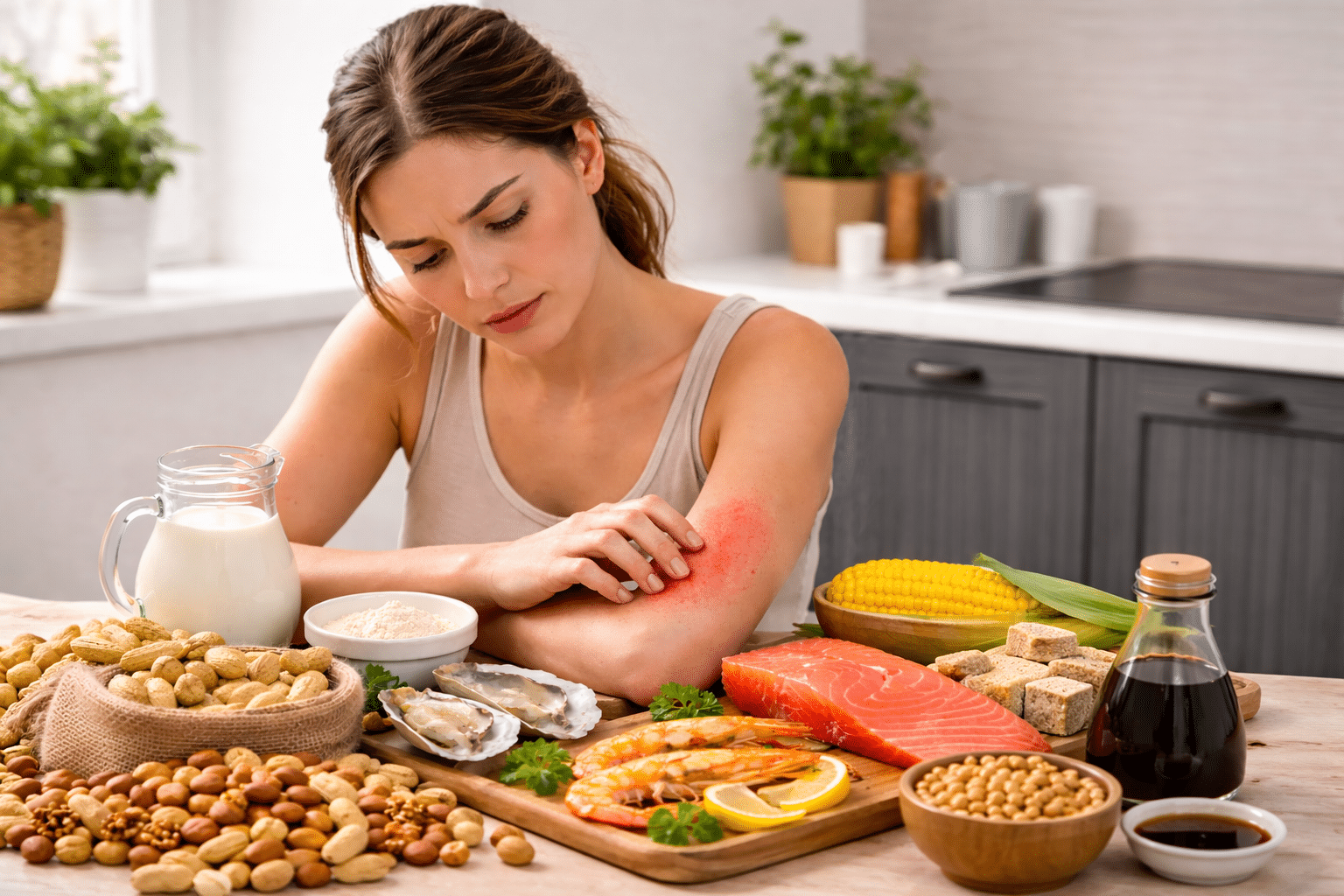


A sudden skin rash can feel confusing, especially when it appears soon after a meal.
You might notice redness around your mouth, itchy patches on your arms, or small bumps that appear suddenly.
While skincare products often get the blame, the real trigger may be something you ate. For some people, certain foods spark an immune response that shows up directly on the skin.
Understanding how diet influences inflammation can help you uncover hidden causes behind persistent flare-ups.
When you begin looking at food as more than fuel, your skin’s signals start to make much more sense.

🔬 The Gut–Skin Connection Explained
Your gut and your skin are closely connected, even though they seem like separate systems.
When you eat something your body recognizes as a threat, your immune system reacts by releasing inflammatory chemicals such as histamines.
These chemicals travel through your bloodstream and can show up as redness, itching, swelling, or eczema-like irritation on the surface of your skin.
Researchers often refer to this relationship as the “gut-skin axis.” A disrupted gut microbiome or ongoing inflammation may increase skin sensitivity.
That’s why some rashes appear minutes after eating, while others develop slowly over hours or even days.
⚠️ Common Symptoms of Food-Triggered Skin Reactions
Food-related skin reactions can appear in different ways depending on how your body responds.
Some people notice itchy hives or raised red patches shortly after eating.
Others may experience tingling around the lips, mild swelling of the face, or scattered bumps that resemble eczema.
In more sensitive individuals, flare-ups can extend to the neck, hands, or arms. Symptoms sometimes show up immediately, but delayed reactions are also possible.
More serious signs, such as throat tightness, dizziness, wheezing, or difficulty breathing, require urgent medical attention.
Recognizing these warning signals early can help you determine whether food may be the hidden trigger behind your rash.
🔥 10 Foods That May Trigger a Skin Rash
🌿 Understanding Your Unique Triggers
While these foods are common triggers, reactions are highly individual.
Not everyone will respond the same way, and some sensitivities may develop gradually rather than immediately.
If you notice recurring flare-ups, keeping a simple food journal may help you uncover patterns your body is trying to show you.
Even small dietary shifts can sometimes reduce inflammation over time. The encouraging news is that just as certain foods may worsen irritation, others can actively support skin repair.
When you begin nourishing your gut and immune system intentionally, your skin often starts to reflect that balance.
🌱 10 Foods That May Help Calm a Skin Rash
🩺 When to See a Doctor
Not all food-related rashes are mild.
If you experience swelling of the lips, tongue, or throat, difficulty breathing, wheezing, dizziness, or a rapid spread of hives, seek medical attention immediately.
These symptoms may signal anaphylaxis, a serious allergic reaction that requires urgent care.
Even recurring mild rashes deserve evaluation if they interfere with daily life.
A healthcare provider or allergist can perform blood tests, skin-prick testing, or supervised food challenges to determine the trigger.
Getting clarity helps you avoid unnecessary restrictions while protecting yourself from potentially dangerous reactions in the future.
🧠 Food Allergy vs Food Intolerance
⚠️ What Is a True Food Allergy?
🌿 What Is a Food Intolerance?
🔎 Why the Difference Matters
💛 Listen to Your Body
FAQs
Yes, certain foods can trigger facial rashes, especially around the mouth, chin, and cheeks.
Common culprits include dairy, peanuts, tree nuts, shellfish, and wheat. In sensitive individuals, the immune system releases inflammatory chemicals that appear as hives, redness, itching, or eczema-like patches.
Sometimes reactions happen quickly, while others may develop gradually over hours or days.
Mild food-related rashes may fade within a few hours once the trigger is removed.
In other cases, symptoms can last several days, particularly if eczema is involved. Severe reactions may require antihistamines or medical treatment.
Avoiding repeat exposure is essential to prevent future flare-ups.
Yes. The gut-skin connection is well documented. When the digestive system is inflamed or the microbiome is imbalanced, the immune response may become overactive.
That inflammation can show up externally as dryness, itching, redness, or breakouts.
Supporting gut health through balanced nutrition may help calm recurring skin issues.
The most common eczema triggers include dairy, eggs, peanuts, soy, wheat, and shellfish.
However, triggers vary from person to person. An allergist can help determine specific sensitivities through testing and medical history evaluation.
It’s best to consult a healthcare provider before removing major food groups long-term.
Self-elimination without guidance can lead to nutrient imbalances. A professional evaluation ensures that you identify true triggers while maintaining a healthy, balanced diet.

✨ Final Thoughts on Healing a Skin Rash from the Inside Out
Skin rashes can feel frustrating, especially when the cause is not immediately obvious.
But your skin is not working against you – it is communicating. For some people, certain foods may trigger inflammation that appears externally as redness, itching, or irritation.
The encouraging news is that the body is resilient. With awareness, thoughtful adjustments, and professional guidance when needed, many people find meaningful relief.
By paying attention to patterns, nourishing your gut, and understanding your unique sensitivities, you empower yourself to take control.
When the inside is supported, the outside often begins to reflect that balance and strength.